
Which Outdoor Improvements Add Value to Jeffersontown and Fern Creek Homes?
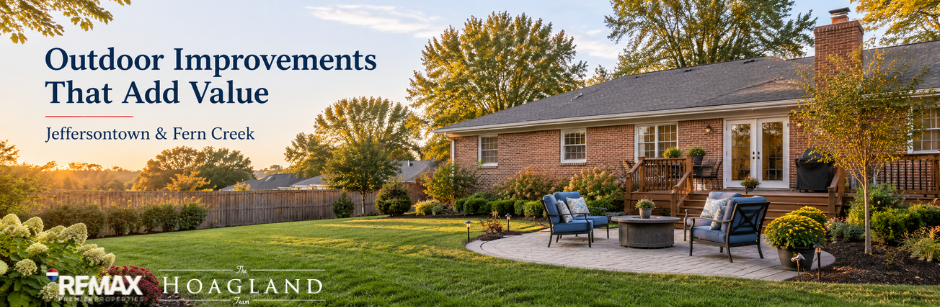
Which Outdoor Improvements Add Value to Jeffersontown and Fern Creek Homes?
Outdoor improvements worth considering for Jeffersontown and Fern Creek homes include repairing worn surfaces, correcting drainage problems, refreshing planting beds, improving entry lighting, and creating practical seating space. The best choice depends on the property's condition, nearby competing homes, installation costs, and whether the goal is resale, rental income, or personal enjoyment.
A backyard can look attractive in photographs and still leave a buyer facing expensive repairs. A modest outdoor space can also work well when it is dry, accessible, and easy to maintain. Start with how the property functions before deciding what to add.
For future home buyers, real estate investors, and visitors considering a move to the Louisville area, the following questions provide a practical way to evaluate outdoor projects. These are planning recommendations, not a ZIP-code-specific ranking of financial returns.
What does “adding value” mean for an outdoor improvement?
An outdoor improvement can add value by making a home more appealing, reducing a repair concern, improving everyday use, or supporting rental demand. Those benefits are different from recovering every dollar spent. For a Jeffersontown or Fern Creek property, any expected price increase needs support from comparable local sales.
Keep three outcomes separate:
- Resale value: What a buyer may pay for the completed property.
- Marketability: How easily buyers understand the home's appeal and maintenance needs.
- Personal usefulness: How much the owner enjoys or uses the space.
The National Association of REALTORS®' 2023 outdoor remodeling report examines estimated project costs, estimated cost recovery, and homeowner satisfaction. It provides national context, not a 2026 contractor quote or a prediction for an individual Louisville-area home. Source: NAR, 2023 Remodeling Impact Report: Outdoor Features
Which outdoor repairs should come before cosmetic upgrades?
For Jeffersontown and Fern Creek homes, address unsafe steps, loose railings, deteriorated deck components, damaged walking surfaces, and water problems before buying decorative features. These repairs tackle existing weaknesses. New furniture, fresh mulch, or a pergola cannot correct an unstable structure or explain why water collects beside the house.
Walk the property from the driveway to the rear boundary. Check gates, stairs, patio edges, exterior doors, and the route between parking and the entrance. Have structural concerns assessed by a qualified professional.
Repair decisions should match the defect. One uneven paver may need resetting; widespread settlement needs a closer investigation. Painting deteriorated wood without correcting the damage creates another maintenance task instead of solving the first one.
Does better drainage add value to a home?
Correcting a drainage problem can protect a property's usefulness and reduce concerns about standing water or moisture near the building. For a Jeffersontown or Fern Creek home, treat drainage work as problem-solving first. Its financial benefit depends on the defect, the remedy, and whether the work actually resolves the cause.
Look for ponding, erosion, recurring muddy areas, and downspout discharge near the foundation. Ask a qualified contractor to explain where water will go after the proposed work. Avoid approving a fix that simply sends the problem toward a neighboring property.
Louisville MSD reviews drainage, grading, easements, and other issues associated with land disturbance. Its guidance lists driveways, decks, patios, and pool construction among projects that can involve its permitting process. Check the proposed scope before excavation. Source: Louisville MSD, Development and Stormwater Permitting
Keep before-and-after photographs, invoices, and any applicable approvals. Buyers should still arrange their own inspections.
What planting and yard improvements are worth considering?
For Jeffersontown and Fern Creek properties, start with healthy existing plants, defined beds, clear walkways, and manageable maintenance. A restrained planting plan can make the yard easier to understand and care for. Choose plants for the actual sunlight, soil, moisture, and mature size instead of filling every available space.
A sensible refresh may include:
- Removing dead plants and clearing weeds.
- Pruning shrubs that block paths or windows.
- Refreshing mulch without piling it against trunks or siding.
- Repairing bare lawn areas after identifying the cause.
- Preserving healthy trees when their location and condition allow.
Ask a nursery or qualified horticulture professional about site-suitable plants. “Low maintenance” still involves watering during establishment and periodic care. For an investment property, consider who will perform that work and include the expense in the operating budget.
Is a patio or a deck the better investment?
A patio may suit a home with a ground-level rear entrance, while a deck may make more sense where the doorway sits above the yard. For Jeffersontown and Fern Creek homes, compare access, grading, drainage, structural requirements, and maintenance before choosing. Neither option guarantees a better resale return.
Start by deciding how the space will be used. A dining table needs room for chairs to move; a grill needs suitable clearance under its manufacturer's instructions; a walking route should remain open when furniture is in place.
If a serviceable patio or deck already exists, obtain a repair quote before pricing replacement. For new construction, request itemized bids covering site preparation, materials, stairs, railings, permits, cleanup, and restoration of disturbed areas.
Avoid sizing the project around the largest possible footprint. Preserve enough yard for other uses.
Do fences, privacy features, and outdoor lighting increase appeal?
Fences, privacy screening, and outdoor lighting can make a Jeffersontown or Fern Creek yard more usable when they solve a specific problem. A working gate, a screened seating area, or a clearly lit entrance may be worthwhile. The benefit depends on placement, condition, upkeep, and the preferences of prospective buyers.
Repair an existing fence before assuming it needs replacement. Confirm boundaries, easements, and applicable restrictions before moving posts or adding a new enclosure. Do not assume an old fence marks the legal property line.
For lighting, concentrate on the entry, steps, house numbers, and routes people use after dark. Aim fixtures to limit glare into neighboring windows. Choose exterior-rated products and use an appropriately qualified installer where needed.
A targeted privacy solution may be enough; enclosing the entire yard is a separate budget decision.
Are pools, outdoor kitchens, and fire features worth the cost?
Pools, outdoor kitchens, and permanent fire features deserve a separate enjoyment budget rather than an assumed resale profit. For a Jeffersontown or Fern Creek home, their usefulness depends on the buyer and property. Installation is only part of the expense; cleaning, repairs, utilities, and future replacement also matter.
Before committing, ask:
- Will the owner use this feature often enough to justify the cost?
- Do comparable homes suggest buyers in this price range expect it?
- What ongoing service and replacement costs should be budgeted?
- What approvals, installation requirements, or insurance changes need checking?
For a near-term sale, consider whether a clean seating area and portable furnishings meet the immediate need. An investor should require evidence of additional income before treating a costly outdoor amenity as an income-producing improvement.
How much should you spend before selling?
The right outdoor budget for a Jeffersontown or Fern Creek sale depends on needed repairs, the home's likely price range, competing listings, and the time available. There is no reliable universal spending percentage. Price the necessary work first, then evaluate optional projects against evidence from comparable properties.
Use this sequence:
- Identify defects. Separate safety, structural, and drainage concerns from appearance preferences.
- Get written quotes. Ask what is included and which conditions could change the price.
- Review competing homes. Compare properties with similar size, condition, location, and outdoor features.
- Set a limit. Include a project-specific allowance for uncertainty.
- Choose the scope. Approve work that addresses the clearest need within the available budget.
Ask Matthew Hoagland and The Hoagland Team of RE/MAX Premier Properties to discuss outdoor project priorities in the context of your planned sale before authorizing a major addition.
What should investors and visiting buyers check outdoors?
Investors and visitors considering a Jeffersontown or Fern Creek purchase should evaluate outdoor maintenance, access, privacy, drainage, and repair needs during property tours. Attractive listing photographs do not establish condition. Rental buyers should also test whether a proposed improvement can support additional income after its ongoing costs are included.
Visitors exploring a possible move can assess practical details: afternoon sun on the seating area, the slope between the house and yard, nearby noise, and how much gardening the property requires. Ask questions about conditions that cannot be observed during a short visit.
Investors should compare similar rentals and budget for mowing, tree care, fence repairs, and deck upkeep. A patio does not by itself justify a higher rent. Tourist appeal also does not establish permission to operate a short-term rental; verify that use separately before purchasing for that purpose.
What approvals should you check before outdoor construction?
Before starting an outdoor project in Jeffersontown or Fern Creek, confirm the property's governing jurisdiction and the approvals that apply to the specific work. Ask about building and zoning requirements, drainage review, easements, utility locations, and private restrictions. A mailing address alone should not determine which permissions you seek.
Provide the reviewing office with a sketch, dimensions, location, and description of the proposed work. Ask which approvals and inspections are required rather than assuming one permit covers every issue. Obtain written HOA approval when applicable, and arrange utility marking before digging.
Keep plans, approvals, contracts, warranties, and completion records together. When choosing your next project, bring that information and contractor quotes to a conversation with Matthew Hoagland and The Hoagland Team of RE/MAX Premier Properties. Visit mylouisvillehomesearch.com to connect about buying, selling, or evaluating a Louisville-area property.
