
What Should Louisville Sellers Repair Before a Buyer’s Final Walk-Through?

What Should Louisville Sellers Repair Before a Buyer’s Final Walk-Through?
Selling a home in Louisville involves more than accepting an offer and scheduling closing day. Between the home inspection, repair negotiations, appraisal, and final walk-through, sellers still have responsibilities that can affect whether the transaction closes as planned.
The buyer’s final walk-through is one of the last opportunities to confirm that the property is in the condition required by the purchase agreement. For sellers in Jeffersontown (40299), Fern Creek (40291), and other Louisville neighborhoods, preparing for this visit can help prevent last-minute disagreements.
But what actually needs to be repaired? Should every small defect be fixed? And what happens if something breaks just before closing?
This guide explains which repairs Louisville sellers should prioritize, what buyers typically check, and how to prepare for the final walk-through without spending money unnecessarily.
1. What Should Louisville Sellers Repair Before the Final Walk-Through?
Louisville sellers should complete all repairs required by their purchase agreement, address any new damage that affects the property’s agreed-upon condition, and confirm that included appliances and major systems are working as required. The final walk-through is primarily about verifying the property’s condition and agreed repairs, not requesting unrelated improvements.
The first step is reviewing the signed purchase agreement and any repair addenda. These documents establish what the seller has agreed to do before closing.
Common repair priorities include:
- Plumbing leaks identified during the inspection
- Electrical hazards covered by negotiated repairs
- Heating and cooling problems
- Roof leaks or other agreed roofing repairs
- Broken windows or damaged doors
- Nonfunctioning appliances included in the sale
- Safety-related defects covered by the agreement
- Damage that occurred after the buyer’s inspection
For example, if a seller agreed to repair a leaking bathroom faucet before closing, the work should be completed according to the agreement.
However, a seller generally should not assume that every cosmetic imperfection needs correction. The obligation depends on the contract, agreed repair terms, disclosures, and applicable law.
Seller tip: Keep a written record of completed repairs, including invoices, receipts, photographs, and warranty information when available.
2. What Is a Buyer’s Final Walk-Through, and Why Does It Matter?
A buyer’s final walk-through is a visit to the property shortly before closing to confirm that its condition meets the purchase agreement. Buyers commonly check completed repairs, included fixtures and appliances, property damage, and whether the seller has removed belongings as required. It is not normally a replacement for the original home inspection.
A final walk-through often occurs within the last 24 to 48 hours before closing, although the actual timing depends on the transaction and scheduling arrangements.
During the visit, buyers may check whether:
- Agreed repairs have been completed.
- The heating and cooling systems operate.
- Plumbing fixtures function without obvious leaks.
- Included appliances remain at the property.
- Doors, windows, and locks work properly.
- The seller has removed personal belongings as required.
- No significant new damage has occurred.
- The property is ready for possession under the contract.
A final walk-through does not automatically give buyers the right to reopen negotiations over every issue they notice.
Instead, it helps both parties determine whether the property is ready to transfer under their existing agreement.
For Louisville sellers, preparing early reduces the chance of discovering an unresolved problem only hours before signing closing documents.
3. Should Louisville Sellers Fix Plumbing Problems Before Closing?
Louisville sellers should repair plumbing problems required by the purchase agreement and promptly address new leaks or damage that could affect the home’s condition before closing. Active leaks deserve immediate attention because they can damage cabinets, flooring, walls, and ceilings. Plumbing repairs should be documented and completed by qualified professionals when necessary.
Plumbing is one of the easiest systems for buyers to check during a walk-through.
A buyer may turn on faucets, flush toilets, run showers, and look under sinks for leaks.
Sellers should pay particular attention to:
- Leaking faucets: Repair agreed defects and active leaks that could cause damage.
- Running toilets: Check whether toilets flush and stop running properly.
- Drainage problems: Address negotiated repairs involving slow or blocked drains.
- Under-sink plumbing: Look for moisture, dripping connections, or damaged cabinetry.
- Water heaters: Confirm the unit is operating as required and has no obvious new leaks.
If a plumbing issue develops after the inspection, notify the appropriate parties rather than concealing it or waiting for the buyer to discover it.
An active leak can become more expensive if left unattended.
4. Should Sellers Repair HVAC Problems Before the Final Walk-Through?
Sellers should ensure that heating and cooling repairs required by the contract are completed before the buyer’s final walk-through. If the HVAC system stops working after the inspection, the seller should notify the parties and determine the required response under the agreement. A functioning system matters because replacement and major repairs can be expensive.
Louisville experiences hot, humid summers and cold winter weather, making heating and cooling important considerations for buyers.
In homes throughout Jeffersontown, Fern Creek, and surrounding neighborhoods, buyers may test the thermostat and confirm that the system responds.
Before the walk-through, sellers can:
- Confirm the thermostat operates.
- Check that heating and cooling respond appropriately.
- Replace a dirty filter when needed.
- Check for unusual noises or visible leaks.
- Arrange service for known problems covered by the agreement.
- Keep documentation of negotiated HVAC repairs.
An older HVAC system does not automatically need replacement simply because the buyer would prefer a newer one.
The distinction is between the system’s age, its actual condition, and the seller’s contractual responsibilities.
5. Do Louisville Sellers Need to Repair Electrical and Safety Issues?
Louisville sellers should complete agreed electrical and safety repairs before closing and address newly discovered hazards promptly. Common concerns include faulty outlets, exposed wiring, malfunctioning switches, and unsafe electrical components. Sellers should use qualified electricians for work that requires professional expertise and retain documentation showing that the agreed work was completed.
Electrical problems can create safety concerns and may be specifically addressed during home inspection negotiations.
Repairs that deserve attention include:
- Faulty outlets identified in the repair agreement
- Ground-fault circuit interrupter (GFCI) issues
- Exposed or damaged wiring
- Malfunctioning light switches
- Electrical panel defects covered by the agreement
- Smoke or carbon monoxide alarm issues where required
Not every older electrical component must be upgraded before selling.
For example, an older home may contain features that differ from modern construction standards without automatically requiring a complete electrical renovation.
What matters is whether the condition is unsafe, whether repairs were negotiated, and whether applicable legal requirements apply.
Sellers should avoid attempting unfamiliar electrical repairs themselves.
6. Should Sellers Fix Roof Leaks, Windows, and Doors Before Closing?
Roof leaks, broken windows, and damaged exterior doors should be repaired when required by the purchase agreement or when new damage affects the property’s agreed condition. Sellers should distinguish between normal aging and actual defects. A roof does not automatically require replacement because it is older, but an unresolved active leak can create a closing problem.
Exterior components protect the home from weather and affect security.
During the final walk-through, buyers may notice new water stains, damaged glass, missing hardware, or doors that no longer close correctly.
Common concerns include:
- Active roof leaks
- Storm-related damage after inspection
- Broken window glass
- Damaged exterior door locks
- Missing screens when their inclusion or condition is contractually required
- Garage doors that do not operate as agreed
- Water intrusion around windows or doors
Consider a Louisville home that experiences a severe storm between inspection and closing.
If the storm damages the roof, the seller should notify the parties promptly. The contract’s casualty or damage provisions may determine the next steps.
Concealing new damage can turn a manageable repair into a serious transaction dispute.
7. Do Appliances Have to Work During the Buyer’s Final Walk-Through?
Appliances included in a Louisville home sale should remain at the property and meet the condition requirements established by the purchase agreement. Buyers may test the refrigerator, oven, dishwasher, microwave, washer, or dryer if those items are included. Sellers should not remove, replace, or substitute agreed appliances without proper authorization.
Appliance disputes can occur when buyers expect an item to remain but the seller believes it is excluded.
The purchase agreement should identify which appliances and other personal property transfer with the home.
Before moving out, sellers should review the agreement and confirm:
- Which kitchen appliances are included
- Whether the washer and dryer remain
- Whether a garage refrigerator or freezer is included
- Whether built-in appliances are operating as required
- Whether any appliance replacement was agreed upon
Suppose a refrigerator included in the sale stops cooling two days before closing.
The seller should notify the real estate agents and determine the appropriate resolution under the contract.
Possible negotiated solutions may include repair, replacement, or a written agreement addressing the issue.
Do not assume that providing a different appliance automatically satisfies the agreement.
8. Should Louisville Sellers Fix Cosmetic Damage Before Closing?
Louisville sellers generally do not need to repaint every wall, replace worn flooring, or correct every cosmetic imperfection before the final walk-through unless the purchase agreement requires it. However, new damage caused during moving or property removal may need attention if it changes the property’s agreed condition. The contract determines the seller’s obligations.
Cosmetic repairs can create confusion because buyers and sellers may have different expectations.
Normal wear and tear is not necessarily the same as new damage.
For example:
- Existing scuffs visible during the showing may not require repair.
- New holes caused by removing mounted equipment may need attention.
- Scratches caused by moving furniture may raise questions about property condition.
- Missing fixtures that were included in the sale may require correction.
- Paint touch-ups may be required if specifically negotiated.
A useful approach is to photograph the property before and after moving.
These photographs can help document its condition, although they do not replace the contract or resolve every disagreement.
Sellers should focus on satisfying their obligations rather than completing an unnecessary cosmetic renovation days before closing.
9. What Should Sellers Remove or Leave Behind Before the Final Walk-Through?
Louisville sellers should remove personal belongings, trash, and excluded items by the deadline stated in the purchase agreement while leaving all fixtures, appliances, and other property included in the sale. The home should be delivered in the condition required by the contract. Sellers should confirm possession terms before scheduling movers or cleaning services.
A final walk-through can become complicated when the property is not ready for the buyer.
Common issues include furniture left in rooms, unwanted belongings in garages, or missing fixtures.
Before the visit, sellers should:
- Remove belongings that are not included in the sale.
- Clear closets, cabinets, attics, and storage areas as required.
- Remove trash and moving materials.
- Leave agreed appliances and fixtures in place.
- Check the garage, basement, and outdoor storage areas.
- Complete any cleaning required by the contract.
- Confirm arrangements for keys, remotes, and access devices.
The property does not automatically need professional deep cleaning unless that level of cleaning is required by the agreement.
However, leaving the home reasonably clean and free of unwanted items can help avoid disputes.
Important: Closing and possession are not always simultaneous. Sellers should follow the agreed possession date and any post-closing occupancy arrangement.
10. What Happens if the Buyer Finds a Problem During the Final Walk-Through?
If a buyer discovers a problem during the final walk-through, the parties should determine whether it violates the purchase agreement or concerns new property damage. Depending on the issue and contract, possible responses include completing repairs, negotiating a written resolution, adjusting closing arrangements, or using available contractual remedies. A walk-through problem does not automatically cancel the sale.
Not every issue requires postponing closing.
A minor problem may be resolved quickly, while significant damage or an incomplete repair may require more time.
Possible responses include:
- Repair before closing: The seller arranges for the agreed work to be finished.
- Written repair agreement: The parties agree on a specific resolution and deadline.
- Closing credit: A credit may be negotiated if permitted by the contract and approved by the lender where required.
- Escrow holdback: Funds may be held for repairs if all necessary parties, including the lender and closing professionals, approve.
- Closing delay: The parties may agree to postpone closing when a significant issue cannot be resolved immediately.
These options are not automatic rights. Their availability depends on the contract, lender requirements, and the circumstances.
Sellers should not make informal promises that conflict with signed documents.
Any change affecting the transaction should be properly documented.
11. Can a Buyer Refuse to Close After the Final Walk-Through in Kentucky?
A Kentucky buyer may have contractual remedies when a seller fails to meet agreed obligations, but the right to delay or refuse closing depends on the purchase agreement and the specific facts. A minor defect does not automatically justify termination. Buyers and sellers should review their contract and seek legal advice when a disagreement threatens closing.
The final walk-through can reveal problems, but it does not create an unrestricted opportunity for either party to change the deal.
For example, a buyer may have a legitimate concern if:
- Agreed repairs were not completed.
- Included appliances were removed.
- Significant new damage occurred.
- The seller cannot deliver possession as required.
- The property no longer meets a material condition of the agreement.
However, the consequences depend on the contract language, the seriousness of the problem, and applicable Kentucky law.
A buyer who refuses to close without a contractual or legal basis may face consequences.
Likewise, a seller who fails to perform contractual obligations may face remedies sought by the buyer.
Real estate agents can help communicate and negotiate, but legal disputes should be reviewed by a qualified Kentucky real estate attorney.
12. When Should Louisville Sellers Complete Repairs Before Closing?
Louisville sellers should schedule negotiated repairs as soon as the repair agreement is finalized and aim to finish them well before the final walk-through. Early completion allows time for contractor delays, follow-up inspections, documentation, and unexpected problems. The purchase agreement controls the actual deadlines, so sellers should not rely on a general timeline alone.
Waiting until the day before closing creates unnecessary pressure.
A practical preparation schedule can help.
Seven to fourteen days before closing
- Review the purchase agreement and repair addenda.
- Confirm all required repairs are scheduled.
- Check contractor availability.
- Review included appliances and fixtures.
- Arrange moving and cleaning services.
Three to six days before closing
- Confirm negotiated work is complete.
- Collect invoices and receipts.
- Test systems that can safely be checked.
- Look for new leaks or damage.
- Confirm moving arrangements.
One to two days before the walk-through
- Check that agreed items remain in place.
- Remove belongings according to the possession agreement.
- Confirm utilities remain available as required.
- Inspect areas where furniture was removed.
- Share repair documentation through the appropriate parties.
On the day of the walk-through
Make sure the property is accessible and ready for the buyer’s visit, consistent with the agreement.
This schedule is a planning example, not a legal requirement or substitute for contract deadlines.
13. What Repairs Should Jeffersontown and Fern Creek Sellers Prioritize?
Home sellers in Jeffersontown’s 40299 ZIP code and Fern Creek’s 40291 ZIP code should prioritize contractual repairs, active leaks, safety concerns, and new property damage before the final walk-through. The repair priorities are generally the same across Louisville. A home’s age, maintenance history, and actual condition matter more than its ZIP code alone.
Both areas contain homes with different construction dates, layouts, and maintenance needs.
Some properties may have older mechanical systems, while others may require attention to drainage, exterior materials, or recently installed equipment.
For a seller preparing a property in either area, useful questions include:
- Has the roof developed a leak since the inspection?
- Are negotiated HVAC repairs complete?
- Are plumbing fixtures operating properly?
- Were any windows or doors damaged during moving?
- Are included appliances still present?
- Have all negotiated safety repairs been completed?
- Is the property ready for possession?
Sellers should not assume that buyers in one neighborhood expect a different contractual standard than buyers elsewhere in Louisville.
The signed agreement remains the starting point.
For sellers working with Matthew Hoagland and The Hoagland Team of RE/MAX Premier Properties, reviewing the contract, repair documentation, and closing schedule together can help identify unfinished items before the final visit.
14. What Should Louisville Real Estate Investors Know About Final Walk-Through Repairs?
Louisville real estate investors should evaluate final walk-through repairs according to the purchase agreement, property condition, and intended use. Investors purchasing rental properties should pay particular attention to plumbing, HVAC, electrical safety, water intrusion, and included equipment. The final walk-through confirms contractual condition; it does not replace a full investment property inspection.
Investors buying properties in Louisville, Jeffersontown, or Fern Creek may be planning to rent, renovate, or resell the home.
Even when a property is being purchased for renovation, the final walk-through remains important.
Investors should verify:
- Agreed repairs were completed.
- No unexpected water damage appeared.
- Included mechanical equipment remains.
- Appliances and fixtures match the contract.
- No unauthorized removal or damage occurred.
- The property is ready for the agreed possession arrangement.
For sellers dealing with investor buyers, clarity matters.
If a property is being sold in its existing condition, the agreement should accurately describe the parties’ responsibilities.
An as-is sale does not automatically eliminate every seller obligation or applicable disclosure requirement.
Investors should also remember that a successful walk-through does not establish that a property meets rental licensing, occupancy, building, or safety requirements.
Those issues may require separate review.
15. What Should Out-of-Town Buyers and People Relocating to Louisville Know?
Buyers relocating to Louisville should arrange their final walk-through with enough time to address problems before closing, even if they cannot attend in person. Depending on the transaction, an authorized representative or agreed virtual walk-through may be possible. Buyers should confirm the arrangement with their agent and understand that remote viewing can miss defects.
For someone moving from another city or state, the final walk-through may be difficult to schedule.
A buyer planning to relocate to Jeffersontown or Fern Creek should discuss access and timing early.
Potential arrangements include:
- Traveling to Louisville before closing
- Scheduling a walk-through during a planned visit
- Asking whether an authorized representative can attend
- Requesting a live video walk-through if the parties agree
- Reviewing repair invoices and supporting photographs
A video walk-through may be convenient, but it cannot reliably confirm every condition that an in-person visit could reveal.
Visitors exploring Louisville neighborhoods before purchasing can also use property tours to learn what to examine in future transactions.
However, an ordinary home tour and a final walk-through serve different purposes.
The final walk-through concerns a specific property under an existing purchase agreement.
16. How Can Louisville Sellers Avoid Last-Minute Closing Problems?
Louisville sellers can reduce final walk-through problems by reviewing the contract early, completing agreed repairs on time, documenting the work, preventing moving damage, and communicating new issues promptly. Sellers should also verify which appliances and fixtures remain and follow the agreed possession terms. Preparation cannot guarantee closing, but it can prevent avoidable disagreements.
A simple final checklist can help sellers stay organized.
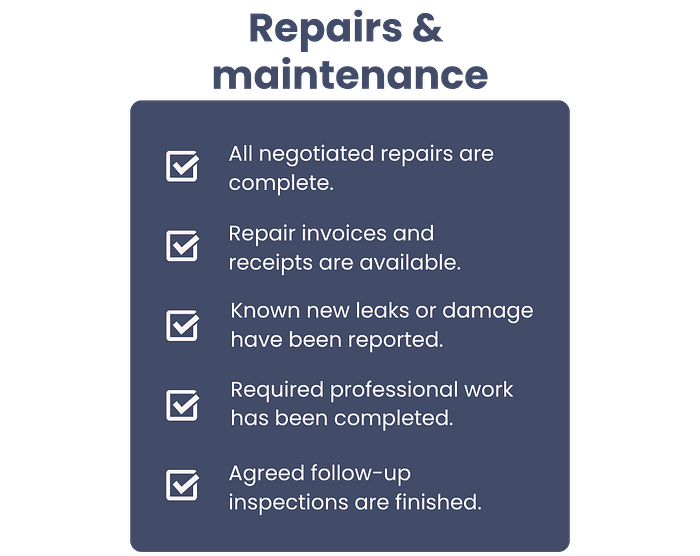
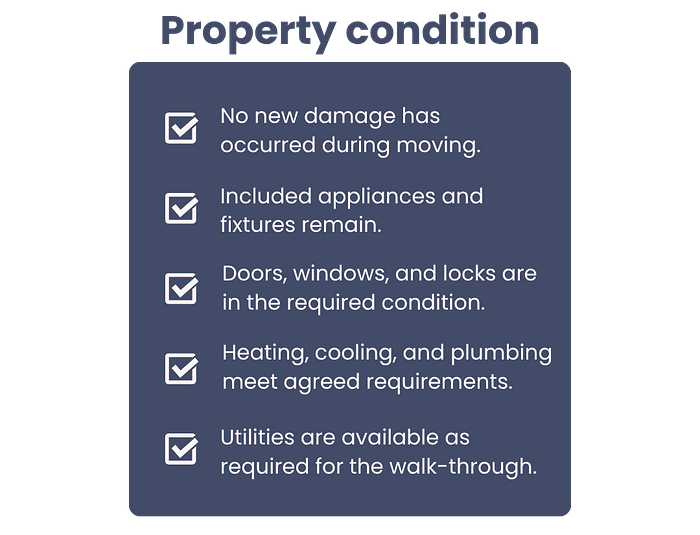
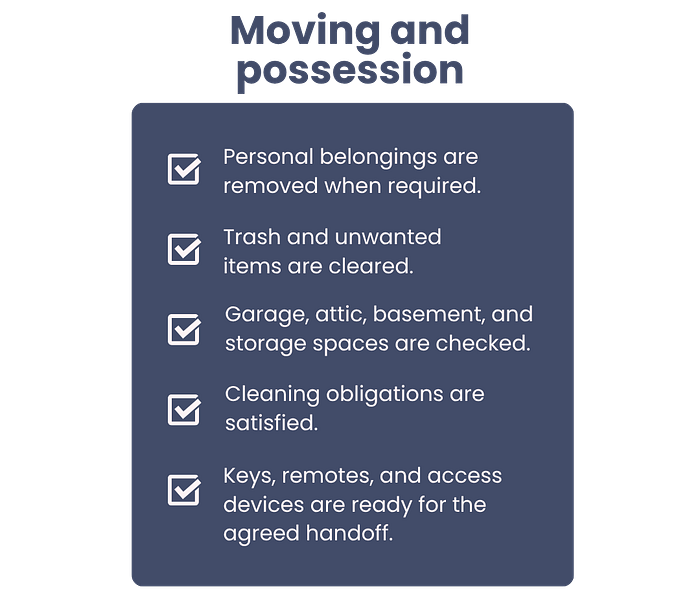
Completing this checklist does not replace a review of the signed contract.
It provides a practical way to catch unfinished items before the buyer arrives.
Frequently Asked Questions About Louisville Final Walk-Through Repairs
Does a seller have to fix everything found during the home inspection?
No. Louisville sellers generally need to complete repairs they agreed to make and meet their other contractual and legal obligations. Inspection findings do not automatically require every defect to be corrected. The buyer and seller may negotiate repairs, credits, or other terms before proceeding with the transaction.
Can a buyer request new repairs during the final walk-through?
A buyer can raise concerns, but the seller is not automatically obligated to accept new repair requests. Whether corrective action is required depends on the contract, the property’s agreed condition, and the nature of the problem. Newly discovered damage may require a different response than an existing cosmetic defect.
Does the seller have to clean the house before closing?
The seller must satisfy the cleaning and property-delivery requirements in the purchase agreement. Many transactions call for the property to be free of unwanted belongings and debris, but professional deep cleaning is not automatically required. Sellers should confirm the exact standard and possession deadline.
What if something breaks after the inspection but before closing?
The seller should promptly notify the parties and review the purchase agreement. Depending on the problem and contract terms, the parties may arrange a repair, replacement, or other written resolution. Significant new damage may be addressed under specific casualty or property-condition provisions.
Can sellers leave furniture or unwanted belongings behind?
Only if the purchase agreement or another written arrangement permits it. Otherwise, sellers should remove items by the agreed deadline. Leaving furniture, trash, or other belongings without authorization can create a dispute over possession and property condition.
Is a final walk-through required in Kentucky?
A final walk-through is a common real estate practice, but it is not automatically required in every Kentucky transaction. The buyer’s right to conduct one and the applicable procedures depend on the purchase agreement and the parties’ arrangements. Buyers should review their contract rather than assume access is guaranteed.
Final Thoughts: Prepare Early and Protect Your Louisville Home Sale
The best way to prepare for a buyer’s final walk-through is to understand exactly what the seller has agreed to deliver.
Not every aging appliance, worn floor, or cosmetic imperfection requires repair. However, incomplete negotiated work, new property damage, missing fixtures, and unresolved leaks can create problems just before closing.
For sellers in Jeffersontown, Fern Creek, and throughout the Louisville area, a little preparation can make the final days of the transaction more manageable.
Thinking About Selling Your Louisville Home?
Matthew Hoagland and The Hoagland Team of RE/MAX Premier Properties can help sellers understand the home-selling process, prepare their property for the market, and coordinate the steps leading up to closing.
Whether you’re selling a home in ZIP code 40299, 40291, or another Louisville neighborhood, knowing what to address before the final walk-through can help you plan with greater confidence.
The Agent You Choose Matters.
Visit www.mylouisvillehomesearch.com to learn more about buying and selling real estate in Louisville, Kentucky, and Southern Indiana.
