
Buying a Home With a Larger Lot in Fern Creek: Benefits, Costs and Questions to Ask
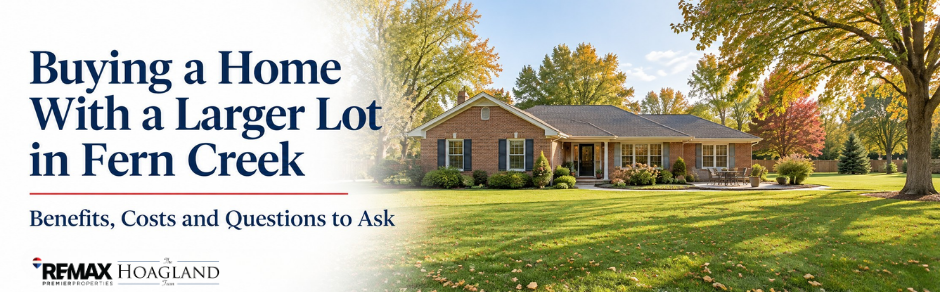
Buying a Home With a Larger Lot in Fern Creek: Benefits, Costs and Questions to Ask
Is buying a home with a larger lot in Fern Creek worth it?
Buying a home with a larger lot in Fern Creek can be worthwhile when the usable outdoor space fits your plans and the ownership costs fit your budget. Before paying more for land, confirm boundaries, drainage, maintenance needs, utility service, and restrictions that could prevent you from using the property as intended.
A wide backyard can make room for gardening, outdoor meals, pets, or simply more distance from neighboring homes. But acreage alone does not tell you whether a property will work. A sloped, wet, or restricted section of land may contribute little to your everyday plans.
For buyers exploring Fern Creek and the 40291 area, the decision starts with one question: What do you want the extra land to do for you? That answer should guide the search, the inspections, and the offer.
What counts as a larger lot in Fern Creek?
A larger lot in Fern Creek should be judged against nearby properties with similar homes, rather than a single acreage cutoff. Compare the recorded parcel size, shape, and usable yard area. A listing’s description of a “large lot” is a starting point, not proof that the land meets your needs.
Separate total acreage from usable space. Consider how much land is occupied by the house, driveway, trees, drainage features, or steep grades. Then look at the area remaining for your intended use.
An irregular parcel may have substantial acreage but a narrow backyard. A smaller rectangular lot may offer a more practical area for a garden or outdoor seating. Request the parcel information and survey documents, and investigate differences between those records and the listing before moving forward.
What benefits can a larger yard offer home buyers?
A larger yard can provide more room for outdoor activities, planting, and separation between homes. Those benefits depend on the property’s layout, terrain, surrounding development, and permitted uses. Buyers should walk the land and identify where their planned activities would actually fit before treating extra acreage as a reason to pay more.
Common reasons to seek additional space include:
- A garden with enough sunlight and access to water.
- Outdoor seating away from the driveway.
- A fenced area for pets, where fencing is allowed.
- Space between the home and neighboring buildings.
- Room to explore an addition or outbuilding, subject to approval.
Privacy deserves a closer look. Trees may block views during summer but leave the house exposed in winter. A large front yard may not create the backyard privacy you want. Listen for traffic and nearby activity, and consider sightlines from neighboring windows.
How much more does a larger lot cost in Fern Creek?
There is no single verified price premium for larger lots across Fern Creek. The purchase cost depends on comparable sales, the home’s condition, location, and the land’s usefulness. Buyers also need property-specific estimates for upkeep, insurance, taxes, and repairs before deciding whether the additional space is affordable over time.
Ask for recent sales of similar homes with different lot sizes. Comparing an updated home on a large parcel with a smaller, older home can confuse the value of the house with the value of the land.
Build two budgets: one for immediate work and another for recurring expenses.
Immediate expenses may include a boundary survey, tree assessment, fence repairs, drainage evaluation, or specialized inspections.
Recurring expenses may include mowing, equipment maintenance, seasonal cleanup, tree care, and upkeep of a longer driveway or additional buildings.
Request written quotes for the actual property. A yard with difficult access or steep sections can require different equipment and labor than a flat, open yard.
Will a larger lot mean higher property taxes and insurance?
A larger lot can affect a Fern Creek property’s assessed value, but acreage alone does not determine its tax bill or insurance premium. Review the parcel’s assessment, applicable tax rates, and any exemptions. Obtain insurance quotes that account for the house, detached structures, and the coverage needed for your planned use.
Jefferson County PVA explains that its residential valuation process considers location, lot size, home size, condition, and improvements such as garages, outbuildings, pavement, and fencing. Lot size is one factor among several. (Jefferson County PVA)
Do not assume the seller’s current tax bill will equal yours. Ask how the assessment and any seller-specific exemptions affect the estimate.
For insurance, disclose existing outbuildings and proposed features such as a pool. Ask which structures are covered, the limits that apply, and whether separate coverage is needed. Get those answers before the purchase becomes binding.
How should buyers check drainage and flood risk?
Buyers considering a larger lot in Fern Creek should review floodplain maps, ask about previous water problems, and inspect how water moves across the property. Look beyond the house itself. Standing water, erosion, drainage channels, and wet areas can limit yard use or create expenses that are not obvious during a dry-weather showing.
MSD directs Louisville and Jefferson County property owners to mapping resources that include FEMA floodplain limits, local regulatory floodplain limits, and combined sewer flood-prone areas. Review the address and the entire parcel, rather than only the building location. (MSD)
At the showing, look for:
- Soil erosion, exposed roots, or sediment deposits.
- Low spots and persistently muddy areas.
- Downspouts discharging near the foundation.
- Drainage ditches or channels crossing the yard.
- Water staining in the basement or crawl space.
Maps do not replace a site evaluation. Ask a qualified professional to investigate concerns before assuming that grading or a drain will solve them. Most homeowners insurance does not cover flood damage; discuss flood coverage separately with an insurer. (National Flood Insurance Program)
Can you add a garage, pool, fence, or second dwelling?
A larger Fern Creek lot does not automatically authorize a garage, pool, fence, or second dwelling. Whether a project is allowed depends on the parcel’s zoning, development standards, easements, recorded restrictions, and required approvals. Verify the specific project with the appropriate authorities before buying a property mainly for its expansion potential.
Louisville’s Land Development Code distinguishes zoning rules governing uses and density from form district rules governing site design. Both can matter when evaluating a proposed project. (codelibrary.amlegal.com)
Describe the intended project clearly: its approximate size, location, purpose, and utility needs. Ask which approvals apply and whether the proposed location conflicts with setbacks or easements.
Review HOA documents and recorded covenants separately. Ask the title professional or an attorney to explain restrictions you do not understand. An existing neighboring structure is not proof that your project will receive approval.
If the project determines whether you want the home, discuss how to investigate feasibility within the purchase contract’s deadlines.
How do surveys and easements affect a larger lot?
A boundary survey can help establish where a Fern Creek property begins and ends, while recorded easements can identify rights others hold over parts of the land. Buyers should review both before planning fences, construction, or exclusive use of an area. A visible fence or online parcel outline is not a substitute for verified boundaries.
Ask whether a current survey is available and whether it addresses your intended use. A surveyor can explain what additional work is needed.
Review the title documents for access, utility, and drainage easements. Depending on their terms, these may affect where improvements can go or who can enter an area for maintenance.
Confirm whether the sale includes one parcel or several. Multiple parcel numbers do not automatically mean a buyer can sell off part of the land. Shared driveways also deserve attention: establish access rights and understand any maintenance agreement.
What should buyers check about sewer, septic, and utilities?
Buyers should confirm the actual sewer and utility service for each larger-lot home in Fern Creek rather than infer it from the address or nearby houses. If the property uses septic, investigate its condition, records, and location. Planned additions or outdoor improvements should be evaluated for conflicts with existing wastewater and utility infrastructure.
Ask the seller for service information, recent bills, and available maintenance records.
For a septic property, arrange a qualified evaluation and ask about the tank, treatment area, system capacity, and space needed for future repairs. Kentucky’s onsite sewage program uses local health departments for site evaluations and inspections. (Cabinet for Health and Family …)
Locate wastewater components before planning a driveway, pool, or outbuilding. Ask the responsible authority how a bedroom addition or other proposed change could affect system requirements. Verify internet service at the exact address, too, especially if working from home is part of the relocation plan.
Are larger-lot homes good investments in Fern Creek?
A larger-lot home in Fern Creek may suit a rental investment when the purchase price, permitted use, rental income, and maintenance obligations support the numbers. Extra land alone does not guarantee higher rent or better resale. Investors should test the property against comparable rentals and evaluate the expense of maintaining outdoor space.
Treat added rental appeal as a possibility to investigate. Compare properties with similar bedrooms, condition, location, and amenities before assigning additional income to the yard.
Decide who will handle mowing, leaves, trees, and fence repairs. Put maintenance responsibilities in a properly prepared lease, and budget for upkeep during vacancies.
If the plan involves visitor accommodation, verify short-term rental eligibility before projecting income. Louisville Metro’s published information states that hosts must register annually, register for tax purposes, and obtain conditional use permits when necessary. (data.louisvilleky.gov)
Do not base the purchase on future subdivision or another dwelling until feasibility has been established.
How can visitors evaluate Fern Creek before relocating?
Visitors considering a move to Fern Creek should use their trip to test daily routines as well as tour homes. Explore the streets around each property, travel to likely destinations, and visit at different times. A pleasant afternoon showing cannot establish what commuting, shopping, noise, or yard maintenance will feel like after moving.
Start with the exact property address. Drive the routes you would use for work and errands when practical, and distinguish your observed travel time from a guaranteed commute.
Notice road access, street lighting, and the relationship between the house and nearby development. Return at another time if noise or privacy matters to your decision. Viewing homes with different yard sizes can also help visitors decide how much outdoor space they will actually use.
What questions should you ask before making an offer?
Before offering on a larger-lot home in Fern Creek, ask questions that connect the land to your intended use, budget, and tolerance for maintenance. Gather records and professional advice within the contract’s deadlines. Unanswered questions about boundaries, water, utilities, or restrictions should become specific investigation items rather than assumptions carried into closing.
Use this checklist:
- What parcel or parcels are included, and how was acreage established?
- Is a survey available, and are any boundary disputes known?
- What easements, covenants, or HOA rules affect the land?
- Has the property experienced flooding, standing water, or drainage repairs?
- Does the home use sewer or septic, and what records are available?
- What is the condition of trees, fences, driveways, and outbuildings?
- Is the proposed addition, pool, garage, or rental use permitted?
- What do property-specific tax, insurance, and maintenance estimates show?
Ready to compare homes with more outdoor space? Contact Matthew Hoagland and The Hoagland Team of RE/MAX Premier Properties through mylouisvillehomesearch.com to discuss your Fern Creek home search, budget, and plans for the land.
This guide provides general buying information. Property conditions and permitted uses require address-specific verification; it does not establish a market price premium or substitute for professional inspections, legal advice, or project approval.
