
Adding a Fence, Shed, or Patio in 40299 or 40291: What to Check First
Adding a Fence, Shed, or Patio in 40299 or 40291: What to Check First
A backyard fence, storage shed, or new patio can make a home more practical. But before buying materials or hiring a contractor in Louisville’s 40299 or 40291 ZIP codes, homeowners need to know which rules apply to their specific property.
That means checking more than the size of the project. Property boundaries, zoning, subdivision restrictions, underground utilities, and drainage can all affect where and how an improvement is built.
For homeowners in Jeffersontown and Fern Creek, the first question should be: What am I allowed to build on this particular lot?
This guide explains what to review before adding a fence, shed, or patio, how to avoid common planning mistakes, and what future buyers and real estate investors should consider.
1. Do You Need a Permit for a Fence, Shed, or Patio in 40299 or 40291?
A fence, shed, or patio may require a permit or other approval in ZIP codes 40299 and 40291, depending on the property’s jurisdiction, project dimensions, construction method, and location. Homeowners should confirm the applicable rules with the local permitting authority before purchasing materials or beginning construction.
A ZIP code does not determine which government office regulates a property.
Jeffersontown has its own municipal government, while properties associated with Fern Creek may fall under Louisville Metro or another applicable jurisdiction. Mailing addresses and neighborhood names are not enough to establish the governing rules.
Before starting a project, identify:
- Whether the property is inside Jeffersontown city limits or another municipality.
- Which planning, zoning, and building offices have authority.
- Whether the project requires a building permit, zoning approval, or both.
- Whether inspections will be required.
- Whether subdivision restrictions or HOA approval apply.
A project that does not require a building permit may still have to meet zoning, easement, or property-line requirements.
Where to start: Visit the official websites of the City of Jeffersontown and Louisville Metro Government to identify the appropriate office and current requirements.
Do not assume a contractor’s experience with another Louisville neighborhood guarantees that the same rules apply to your address.
2. What Should You Check Before Installing a Fence in Jeffersontown or Fern Creek?
Before installing a fence in 40299 or 40291, confirm your property lines, applicable height restrictions, permitted locations, easements, HOA requirements, and underground utility locations. Fence rules can differ by jurisdiction and lot configuration, particularly for corner lots, front yards, and properties near public rights-of-way.

Start with the property boundary
One of the most expensive fencing mistakes is building in the wrong location.
A fence placed beyond the legal property boundary can create disputes with neighbors, interfere with future property transactions, or require removal.
Before construction:
- Review any existing boundary survey or recorded plat.
- Confirm whether the available documents establish the relevant boundary.
- Hire a licensed surveyor when the line is uncertain.
- Check recorded easements and rights-of-way.
- Confirm that the proposed fence location is permitted.
Existing fences, landscaping, and mowing patterns are not reliable proof of legal boundaries.
Ask about fence height and placement
Restrictions may depend on where the fence sits.
For example, a fence along a rear property boundary may be treated differently from one near a driveway or street intersection.
Ask the applicable zoning office about front-yard and side-yard placement, maximum height, visibility requirements, and any special rules for corner lots.
Check HOA and subdivision restrictions
Some neighborhoods require approval of fence materials, colors, styles, and locations.
Even when a municipal permit is not required, private restrictions may still apply.
Buyer tip: If a fenced backyard is a priority, do not assume every home can accommodate the same fence design. Review the lot and applicable restrictions before making plans.
3. Can You Build a Storage Shed in 40299 or 40291?
A storage shed may be allowed on a residential property in Jeffersontown or Fern Creek, but its size, height, foundation, location, and intended use can affect approval requirements. Homeowners should verify zoning setbacks, easements, lot coverage limits, and applicable building rules before purchasing or installing a shed.

A shed can solve common storage problems, especially for homeowners who need space for lawn equipment, bicycles, gardening supplies, or seasonal decorations.
However, a prefabricated shed is not automatically exempt from local rules.
Questions to answer before ordering a shed
- What is the maximum permitted size without a building permit, if an exemption applies?
- How far must the shed sit from property lines and other structures?
- Does the zoning district limit accessory buildings or total lot coverage?
- Can the shed be placed on gravel, blocks, or a concrete foundation?
- Are there restrictions on height, roofing, or exterior materials?
- Will electricity or plumbing require separate permits?
- Does the HOA permit the proposed structure?
The answers can depend on the address and the details of the structure.
Think about how the shed will be used
A basic storage shed is different from a workshop, home office, or converted living space.
Adding electrical service, plumbing, heating, or occupancy-related features may introduce other code requirements.
A shed intended for storage should not be advertised as legal living space unless its approved use supports that description.
Avoid the drainage problem
Water should not collect underneath the structure or flow toward a neighboring property because of new grading.
Choose a location with appropriate drainage and confirm whether the installation will affect existing swales or drainage easements.
Investor tip: Before buying a rental property with an existing shed, check its condition, location, and approval history when relevant. Do not assume a structure was lawfully installed simply because it was present when the property was purchased.
4. Do You Need Approval to Build a Patio in Louisville’s 40299 or 40291?
A patio’s approval requirements depend on how it is constructed, where it is located, and whether it changes drainage or involves other regulated work. A simple ground-level surface may be treated differently from a raised patio, retaining wall, covered structure, or outdoor kitchen. Confirm requirements before construction.

Patios can provide outdoor dining space, seating areas, and easier access to the backyard.
Common materials include poured concrete, concrete pavers, brick, and natural stone.
Each material has different installation, maintenance, and drainage considerations.
Ground-level versus raised patios
A basic ground-level patio and an elevated structure may be subject to different requirements.
Projects involving steps, substantial retaining walls, footings, roofs, or connections to the house can involve building-code issues beyond those of a simple paved surface.
If the project includes a pergola, roof, outdoor fireplace, or permanent utility connections, ask about those elements separately.
Consider water movement before pouring concrete
A new hard surface can change where rainwater travels.
Improper grading may direct water toward the foundation, neighboring lots, or areas that already experience standing water.
Before installation, ask the contractor:
- How will water drain away from the house?
- Will the new surface change the yard’s existing slope?
- Are any drainage easements affected?
- Is a retaining wall necessary?
- Will downspouts need to be redirected?
- Are there existing drainage problems that should be corrected first?
A patio should improve outdoor use without creating a new water problem.
Consider long-term maintenance
Concrete can crack, pavers can settle, and joints may require maintenance.
The appropriate surface depends on the soil conditions, slope, expected use, installation quality, and available budget.
For buyers considering a home with an existing patio, look for uneven surfaces, pooling water, significant settlement, and signs of drainage problems near the foundation.
5. What Are the Actual Fence and Shed Permit Exemptions in Louisville?
Louisville Metro lists building-permit exemptions for fences no taller than 7 feet and qualifying one-story detached storage sheds under 200 square feet. These exemptions do not eliminate zoning restrictions. Jeffersontown also maintains separate local requirements, so homeowners must verify which regulations apply to their property.
For properties under Louisville Metro’s applicable residential building rules, published exemptions include:
- Fences up to 7 feet tall.
- One-story detached storage sheds and similar structures with floor areas under 200 square feet.
- Certain retaining walls under 4 feet tall.
- Certain small, ground-level decks meeting specific height, area, attachment, and exit conditions.
These are building-permit exemptions, not permission to build anywhere on the lot. Louisville Metro separately identifies fences, sheds, and covered patios as projects that may require zoning review.
What about Jeffersontown?
Jeffersontown’s published Planning and Zoning FAQ states that the city does not currently require its own fence permit, while specifying restrictions on fence height and location.
Its guidance includes a 4-foot limit for front and street-side yard fences, along with different limits for solid and chain-link fences in side and rear yards. Corner-lot visibility restrictions also apply.
For sheds and other construction, the city’s Building Department and Planning and Zoning office should be consulted about applicable approvals.
Because building codes, zoning requirements, and administrative procedures can change, confirm the current requirements before work begins.
6. How Do You Check Property Lines, Easements, and Underground Utilities?
Before digging fence-post holes, placing a shed foundation, or excavating for a patio, homeowners should identify property boundaries, recorded easements, and underground utility locations. A survey helps establish legal boundaries, while utility locating helps identify buried infrastructure. These are separate checks, and neither replaces the other.
Property lines versus easements
Owning a piece of land does not necessarily mean every part of it can be used for permanent improvements.
An easement may allow a utility company or another authorized party to access a portion of the property.
Building within an easement can interfere with maintenance access and may lead to removal or relocation requirements.
Review the recorded plat, title documents, and any available survey before choosing a location.
Contact Kentucky 811 before digging
Kentucky 811 provides a process for requesting the location of participating utilities’ underground facilities before excavation.
Visit Kentucky 811 for current instructions and notice requirements.
Remember that public utility markings may not identify every privately owned underground line, including certain irrigation, lighting, or utility connections. Private locating services may be necessary.
7. Will a Fence, Shed, or Patio Increase Home Value in 40299 or 40291?
A well-designed fence, shed, or patio may improve a home’s usefulness and appeal to some buyers, but an increase in resale price is not guaranteed. The financial effect depends on property condition, installation quality, buyer preferences, comparable sales, maintenance needs, and whether the improvement complies with applicable rules.
A fence may appeal to buyers who want more backyard privacy or an enclosed outdoor area.
A shed may be useful for buyers who need storage but do not want to use garage space.
A patio may appeal to people who enjoy outdoor dining or entertaining.
However, the amount spent on a project should not be confused with the amount a future buyer will pay for it.
What buyers may notice
A buyer evaluating a home in Jeffersontown or Fern Creek may consider whether an outdoor improvement:
- Looks consistent with the property.
- Is properly maintained.
- Fits the available yard space.
- Creates ongoing repair expenses.
- Limits other possible uses of the backyard.
- Has appropriate approvals and documentation.
A large shed that dominates a small backyard, for example, may not appeal to someone who wants open lawn space.
How should sellers evaluate outdoor upgrades?
Before spending money specifically to prepare a home for sale, compare the proposed improvement with similar homes in the immediate market.
Matthew Hoagland and The Hoagland Team of RE/MAX Premier Properties can help homeowners review local comparable properties and discuss whether an outdoor improvement makes sense before listing.
The goal should be to make an informed decision based on the home and the market, rather than assume every improvement will recover its cost.
8. What Should Real Estate Investors Check Before Adding Outdoor Improvements?
Real estate investors considering fences, sheds, or patios in 40299 and 40291 should evaluate construction costs, permitting, insurance, maintenance, tenant responsibilities, and expected rental demand. An improvement should serve a clear purpose and fit the property’s financial plan rather than be installed solely because neighboring properties have one.
For a long-term rental, a fence may make the yard more useful to some tenants, while also introducing gates, posts, and panels that require upkeep.
A storage shed may provide extra space, but the lease should address permitted use, access, and maintenance responsibilities.
A patio may reduce some lawn area while introducing surface maintenance and potential drainage concerns.
Questions for rental property owners
Before approving a project, ask:
- Does the improvement solve a specific property problem?
- What is the full installation cost, including site preparation?
- Will the improvement require insurance changes?
- Who will maintain and repair it?
- Does the lease need to address its use?
- Could the project affect drainage or neighboring properties?
- Is there credible evidence that tenants in this property’s rental segment want the feature?
Investors should also consider how the improvement might affect future resale, even if the property is currently intended for rental income.
9. What Should Home Buyers Check When a Property Already Has a Fence, Shed, or Patio?
Buyers considering homes in Jeffersontown or Fern Creek should inspect existing outdoor structures for condition, location, drainage problems, and available permit documentation. An attractive backyard feature can still create future expenses if it is damaged, improperly installed, or located in an easement or across a property boundary.
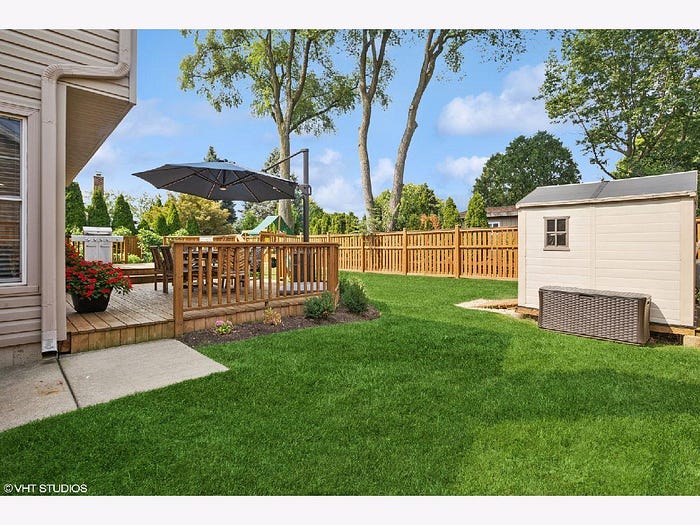
A home showing may not reveal every problem associated with outdoor improvements.
During due diligence, buyers can ask about the age of the installation, past repairs, and whether the seller has relevant permits, surveys, warranties, or contractor records.
Common warning signs
For fences, look for leaning posts, rotting wood, damaged gates, and sections that appear to extend beyond the expected property boundary.
For sheds, check the roof, floor, foundation, doors, moisture intrusion, and any installed electrical equipment.
For patios, look for substantial cracks, uneven surfaces, pooling water, and grading toward the house.
A home inspection can help identify visible concerns, but a survey or specialized contractor evaluation may be needed for boundary and construction questions.
10. What Is the Best Order for Planning a Backyard Project?
The best approach is to confirm jurisdiction and property restrictions first, then determine the design, budget, contractor, and installation schedule. Checking legal and physical limitations before purchasing materials can reduce the risk of redesigns, permit delays, boundary disputes, and unexpected construction costs.
Use this checklist before starting work.

11. Where Can Homeowners Verify Rules for 40299 and 40291?
Homeowners should begin with the official permitting and zoning offices responsible for their property’s address. Jeffersontown maintains its own building and planning departments, while Louisville Metro publishes residential permit exemptions and zoning guidance. Confirm jurisdiction before relying on either set of rules.
For properties within Jeffersontown city limits:
- City of Jeffersontown Building Department
- 10416 Watterson Trail, Jeffersontown, KY 40299
- Phone: 502–267–8333
- Permits, Applications & Fees
For properties governed by Louisville Metro:
- Louisville Metro Construction Review and Planning
- Residential Project RequirementsLand Development Code
Both sources can help property owners identify applicable requirements, although specific project approval depends on the facts of the property and proposed work.
12. Frequently Asked Questions About Fences, Sheds, and Patios in Louisville
Can I put a fence directly on my property line?
A fence may be permitted along a property boundary, but the exact location must comply with applicable zoning rules, easements, and private restrictions. Before installation, establish the boundary through reliable records or a survey. Do not rely solely on an existing fence or a neighbor’s estimate of where the line sits.
Is a prefabricated shed exempt from permits?
Not automatically. Louisville Metro publishes a building-permit exemption for qualifying one-story detached storage structures under 200 square feet, but zoning requirements still apply. Jeffersontown has its own review process. The fact that a shed arrives fully assembled does not, by itself, establish whether approval is required.
Can I build a patio over an easement?
Do not assume a patio is allowed within an easement. The easement’s terms, location, and purpose may restrict construction or require approval. Review the recorded documents and consult the appropriate authority or easement holder before placing permanent materials over the area.
Does my HOA have the final say on my fence design?
An HOA may enforce applicable private restrictions, but its approval does not replace government requirements. Homeowners may need to satisfy both. A design accepted by an HOA can still violate zoning or building rules, and government approval does not automatically waive valid private restrictions.
Should I build a patio before selling my house?
A new patio is not automatically a worthwhile pre-sale investment. Its potential benefit depends on the existing yard, property condition, cost, and buyer expectations. Sellers should review comparable homes and consider less expensive repairs or maintenance before committing to a major installation.
Final Thoughts: Check the Rules Before You Build
Adding a fence, shed, or patio can make a property more useful, but the right project begins with the right information.
In Jeffersontown’s 40299 area and Fern Creek’s 40291 area, homeowners should start with the actual property address, identify the responsible government office, and review zoning, property boundaries, easements, and private restrictions before construction.
Whether you’re improving your current home, preparing to sell, purchasing a property, or evaluating a rental investment, the same principle applies: make sure the improvement fits the property before spending money on it.
Thinking About Buying, Selling, or Improving a Home in Louisville?
Matthew Hoagland and The Hoagland Team of RE/MAX Premier Properties work with buyers and sellers throughout Louisville, including Jeffersontown, Fern Creek, and surrounding communities.
If you’re considering an outdoor improvement before listing your home or want to understand how a property’s backyard features compare with other homes, start with a conversation about your real estate goals.

